Building fleet business starts with finding businesses your shop can serve and having a useful conversation with the person responsible for their vehicles. Whether you do the outreach yourself or have an outside sales rep, a clear prospect list and a record of each conversation give you somewhere to start.
Start with businesses that fit your shop.
Think about the vehicles you already service, your shop’s capacity, and the area you can realistically cover. A local plumbing company, electrical contractor, landscaping business, or delivery company could be a prospect when its vehicles match the work your shop does.
Where to find local companies with fleet vehicles near you.
Companies with fleet vehicles near you are usually easy to spot once you start looking. A few places to start:
- Watch the road near your shop. Lettered vans and pickups at job sites, supply houses, and gas stations show you which local businesses run vehicles in your area.
- Search online maps by trade. Look up plumbers, HVAC companies, electricians, landscapers, pest control, cleaning services, property managers, and couriers in the area your shop serves.
- Drive the business and industrial parks nearby. Service companies often park their vehicles there overnight.
- Ask your current customers. Some of them own or work for businesses with vehicles, and they already know your shop.
A short list of nearby companies you can actually serve is worth more than a long list from across the region. These become your fleet leads. For more on building and working that list, see how to find commercial fleet leads.
Build a list with each company’s name, business phone number, location, and any contact information you can confirm. Check whether the company is already in your records before adding it again. The goal is a useful list your team can work through.
Find the person who handles vehicle service.
The first person who answers may not make maintenance decisions. Ask who arranges service for the company’s vehicles and how they prefer to be contacted. Record the person’s name, role, and direct contact details when they provide them.
“We’re a local repair shop. Who handles maintenance and repairs for your company vehicles?”
Use that as an opening, then listen. Ask about the types of vehicles they operate, how they schedule service, and what matters to them when choosing a shop. Keep your conversation focused on services your shop can actually provide.
Save what you learned while it is fresh.
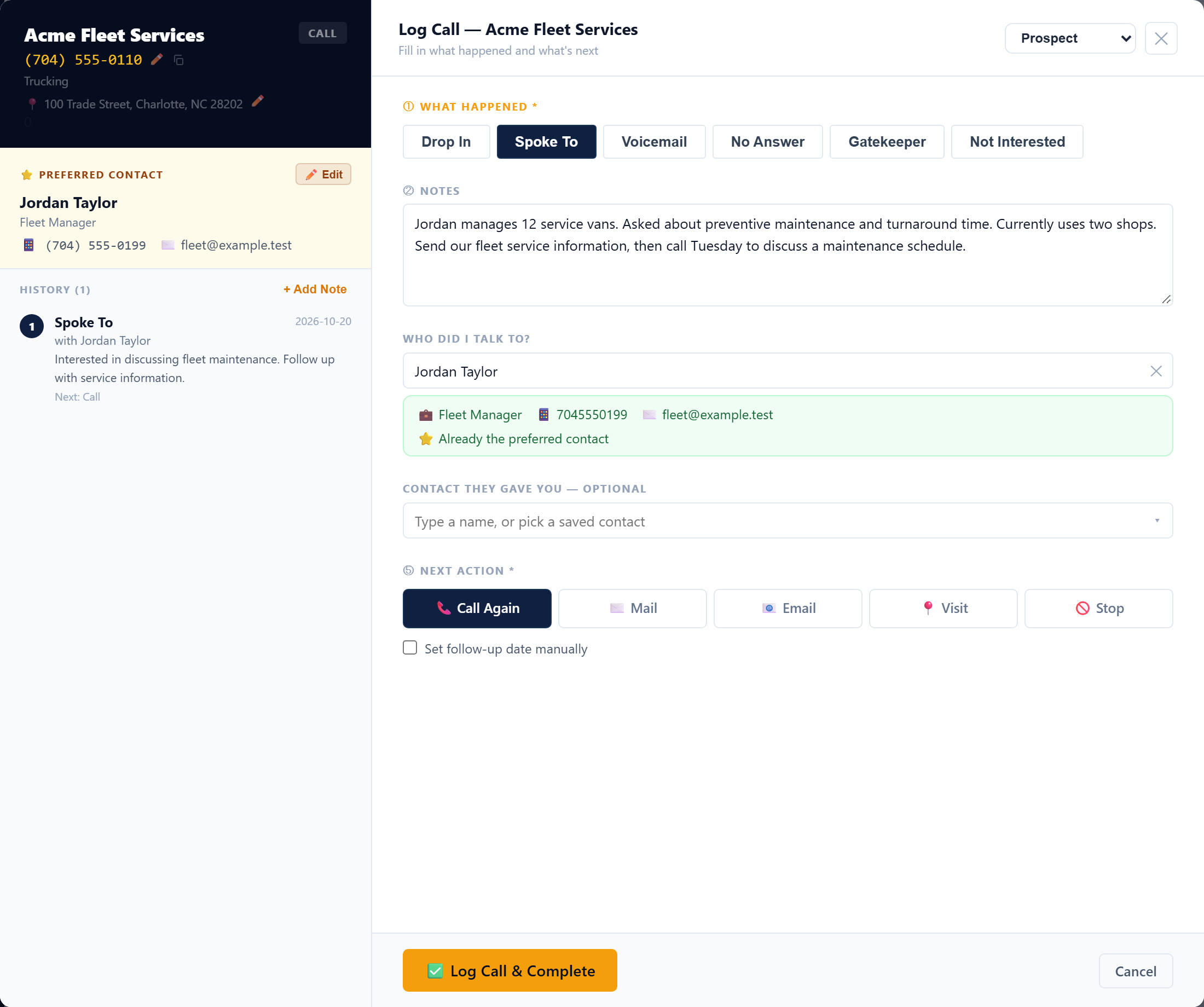
A note that says “called” leaves the next person guessing. A useful note explains who you spoke with, what they asked about, and what you agreed to do next.
For example: “Spoke with Jordan, who handles service for 12 vans. Asked about preventive maintenance and turnaround time. Send service information, then call Tuesday to discuss their schedule.” This is a sample conversation, but it shows the kind of context worth saving.
Give every conversation a next step.
Choose an action that follows from the conversation: another call, mailing information, an email, or a visit. Record a follow-up date when you have agreed on one. Respect a request to stop outreach and keep that decision visible to everyone on your team.
In Fleet Searcher, log the outcome, add your notes and the person you spoke with, choose the next action, and save. The company’s history keeps the conversation available when you return to it.
Keep the owner and outside sales rep working from the same history.
If your rep visits a prospect and the owner follows up by phone, both need the same context. Keep the visit notes, contacts, and next action with the company record. Before reaching out again, review the last conversation so the prospect does not have to start over.
When you are ready to turn those conversations into ongoing work, our guide on how to get fleet accounts as an established shop covers the offer and the first job. For approvals, billing, and the vehicle list, see how to set up a fleet account the account.
Review due outreach together and decide who will handle it. A shared CRM gives your shop a place to keep those records; your team still decides what to say, when to follow up, and which relationships are a good fit.
Related reading
- How to Find Companies with Fleet Vehicles Near Your Shop
- How to Get Fleet Accounts as an Established Auto Repair Shop
- How to Find Fleet Manager Email and Contact Information
Give your fleet outreach a place to live.
Fleet Searcher helps independent auto repair shops organize fleet prospects, contacts, conversation notes, outreach queues, and follow-ups.
See how Fleet Searcher works →Talk with us about your shop →